Celebrating the Light!
Celebration seems such a crucial element to living in NVC Consciousness. When I recognize the needs of mine that are satisfied in the moment, I generally feel open, alive and grateful. And the observation, for me from my perch of privilege, is that most of my needs are satisfied much of the time. I first learned this lesson a year and a half ago when I rushed from Albuquerque to Atlanta to support my parents during a severe and unexpected health crisis. My time at my parents' home stretched out to two months, and during those 60 days, most of them apart form Jori and the ground of my "normal" everyday experience, I learned a deep lesson about the power of acknowledging "ordinary" gratitude. Some moments, practically the only need I could acknowledge as satisfied was the need for air. I always had enough air! I was surviving!
Noticing this opened up the space to acknowledge other needs satisfied in that moment as well: safety, respect, community, autonomy, effectiveness, connection, love, interdependence... it ended up being a cornerstone of my NVC practice during that period, and since - the simple acknowledgment and savoring of a need satisfied.
And something about the space that opens up from gratitude transforms the experience of mourning, as well. Since our needs are in constant and dynamic flux, in any given moment, some needs are satisfied, some are emerging into awareness, and others may become downright urgent; and there may be the pain of acknowledging chronically unmet needs- the sweet pain of noticing that life does not always unfold to support every need being met in every moment. For some of us, we suffer deeply because some of our needs have gone unsatisfied for far longer than we would wish. When our needs are not satisfied, by design and by definition, we feel uncomfortable. The lack of comfort moves us in the service of our unsatisfied needs. If we did not feel the pain of hunger, we would not be motivated to eat!
So mourning and gratitude end up being two sides of the same coin of celebration. As we move into the darkest days of the year (in the Northern Hemisphere), my wish for you is to celebrate the inner Light of awareness of Life moving within you. May your attention on your feelings and needs motivate you towards creating and sustaining well-being for your self, for those you care about, and for those you do not even know.
Warmly,
Jim
Friday, December 15, 2006


Tuesday, November 07, 2006
Deserve Thinking: A Root Cause of Violence
Greetings friends,
I received a letter from a friend recently. I enjoyed considering and answering his question and I thought it might contribute if I shared it here. His questions and comments are in italics; my answers are embedded in plain text.
Hi Jim,
Would you be willing to help me out if this mental box I am finding myself in?
Yep! I feel excited and pleased that you asked because I would love to contribute in this way.
I was discussing the concept of "deserve" with my girlfriend last night. At one point she said "My son deserves anything his heart could ever want, but I know that he won't get it because that's the way the world is". This is paraphrasing, but I am now able to connect with her need for her child's well-being, and also that she is mourning that life is not always full of ease.
I feel touched hearing your expression of empathy...
The difficulty for me is that we discussed my friends in Africa. She asked me if I thought they "deserved" the lot they've been dealt. I find it difficult to find my way out of this conundrum. On one hand I think that the deserve concept alienates us from our feelings and even can make the issue seem external-so it is harder to connect with our needs, but then I also say "no, they DON'T deserve that!"
How can I reconcile the concept of people deserving good things in their life and NVC?
I hear your eagerness to understand important distinctions around the deserve concept in NVC.
For me, deserve is the most pernicious and dangerous of all of life-alienated communication and is at the root of the structures that perpetuate violence. Deserve implies:
1. Belief in a single, absolute code delineating what is right and what is wrong.
2. A judge that can determine whether or not a behavior or belief is right or wrong within the code.
3. A judge with the institutional power to mete out punishment for "evil-doers", those whose behavior or beliefs are found lacking and therefore condemned by the code.
4. A system of institutionalized punishment and submission to enforce, through coercion, the dictates of the code and the judge.
5. A population willing to capitulate and submit to that power.
When I hear someone say, "My son deserves everything his heart could ever want," the first thing I want to do is translate that into feelings and needs, like I heard you do. Something like, "Sounds like you really value your son's well-being and you really want him to thrive, is that it?"
And when I hear, "do you think your African friends deserve the lot they've been dealt," I want to transform that as well: "Are you feeling curious about how I feel about the life conditions that my friends find themselves in? Are you feeling concerned about my well-being as I connect with what life is like for them? Are you concerned about their well-being and access to resources to fulfill their basic needs?"
Then, I want to divorce myself from the life-alienated concept of deserve; I want to de-link behaviors and beliefs from punitive or manipulative consequences. No one deserves to suffer because no one has ever done anything wrong. The existence of a singe, absolute code is an illusion perpetuated by "the domination system" as a tragic expression of the need for order. Fighting about which is the one right code has been the root cause of so many wars!
The observation, I think, is life conditions arise for people based on a wide and deep variety of factors. Being born in poverty just happens; sadly, every few seconds. This breaks my heart, because I have a need for universal well-being. There are structural causes for this and strategies can and will emerge to address this systemically. This is the heart of social change work. NVC can help us to manage our heartbreak and despair through empathy and life-affirming mourning, freeing the energy to creatively address the structural problems perpetuating suffering.
And I want some understanding that all humans have a birthright to the fulfillment of all human needs. A birthright is way beyond deserve; a birthrights is universal, like needs, and shared by all regardless of geography, behavior, capability, beliefs, values, or identity. Simply stated, by virtue of being human, we have a birthright to the fulfillment of our needs. I want to contribute to that fulfillment as compassionately and effectively as possible.
I wonder if this distinction, deserve vs birthright, adds to your clarity? I wonder how you feel hearing it and if you would be willing to share your reactions.
Warmly,
Jim
Greetings friends,
I received a letter from a friend recently. I enjoyed considering and answering his question and I thought it might contribute if I shared it here. His questions and comments are in italics; my answers are embedded in plain text.
Hi Jim,
Would you be willing to help me out if this mental box I am finding myself in?
Yep! I feel excited and pleased that you asked because I would love to contribute in this way.
I was discussing the concept of "deserve" with my girlfriend last night. At one point she said "My son deserves anything his heart could ever want, but I know that he won't get it because that's the way the world is". This is paraphrasing, but I am now able to connect with her need for her child's well-being, and also that she is mourning that life is not always full of ease.
I feel touched hearing your expression of empathy...
The difficulty for me is that we discussed my friends in Africa. She asked me if I thought they "deserved" the lot they've been dealt. I find it difficult to find my way out of this conundrum. On one hand I think that the deserve concept alienates us from our feelings and even can make the issue seem external-so it is harder to connect with our needs, but then I also say "no, they DON'T deserve that!"
How can I reconcile the concept of people deserving good things in their life and NVC?
I hear your eagerness to understand important distinctions around the deserve concept in NVC.
For me, deserve is the most pernicious and dangerous of all of life-alienated communication and is at the root of the structures that perpetuate violence. Deserve implies:
1. Belief in a single, absolute code delineating what is right and what is wrong.
2. A judge that can determine whether or not a behavior or belief is right or wrong within the code.
3. A judge with the institutional power to mete out punishment for "evil-doers", those whose behavior or beliefs are found lacking and therefore condemned by the code.
4. A system of institutionalized punishment and submission to enforce, through coercion, the dictates of the code and the judge.
5. A population willing to capitulate and submit to that power.
When I hear someone say, "My son deserves everything his heart could ever want," the first thing I want to do is translate that into feelings and needs, like I heard you do. Something like, "Sounds like you really value your son's well-being and you really want him to thrive, is that it?"
And when I hear, "do you think your African friends deserve the lot they've been dealt," I want to transform that as well: "Are you feeling curious about how I feel about the life conditions that my friends find themselves in? Are you feeling concerned about my well-being as I connect with what life is like for them? Are you concerned about their well-being and access to resources to fulfill their basic needs?"
Then, I want to divorce myself from the life-alienated concept of deserve; I want to de-link behaviors and beliefs from punitive or manipulative consequences. No one deserves to suffer because no one has ever done anything wrong. The existence of a singe, absolute code is an illusion perpetuated by "the domination system" as a tragic expression of the need for order. Fighting about which is the one right code has been the root cause of so many wars!
The observation, I think, is life conditions arise for people based on a wide and deep variety of factors. Being born in poverty just happens; sadly, every few seconds. This breaks my heart, because I have a need for universal well-being. There are structural causes for this and strategies can and will emerge to address this systemically. This is the heart of social change work. NVC can help us to manage our heartbreak and despair through empathy and life-affirming mourning, freeing the energy to creatively address the structural problems perpetuating suffering.
And I want some understanding that all humans have a birthright to the fulfillment of all human needs. A birthright is way beyond deserve; a birthrights is universal, like needs, and shared by all regardless of geography, behavior, capability, beliefs, values, or identity. Simply stated, by virtue of being human, we have a birthright to the fulfillment of our needs. I want to contribute to that fulfillment as compassionately and effectively as possible.
I wonder if this distinction, deserve vs birthright, adds to your clarity? I wonder how you feel hearing it and if you would be willing to share your reactions.
Warmly,
Jim
Tuesday, October 31, 2006
Statement to the Network from Marshall and Valentina
My wife, Valentina, and I would like to share our celebrations with
you stimulated by the recent Center for Nonviolent Communication
board meeting near Atlanta, Georgia. The Center for Nonviolent
Communication now has NVC groups working in 65 countries on every
continent and about ¼ million people per year are receiving our
training. At the recent Board meeting we shared our vision that
within the next 10 years we would like to have NVC teams in every
country and NVC reaching millions through mainstream media outlets.
We want to share with you how touched and celebratory we are feeling
at the response of everyone present to this vision. To achieve these
two visions we are radically transforming our organization.
Valentina and I will be leading a Leading Team, {LT} formalizing what
has been our unofficial role.
We are encouraging all trainers to operate, not on their own, but in
association with local NVC circles so that they work together to
support the NVC mission. To support this organizing effort, Jim and
Jori Manske will focus on building the Global Coordinating Council
(GCC).
We are also taking steps to synergize with other organizations who
are also working for a transformation in consciousness.
We will expand the number of NVC trainers on the CNVC staff to better
meet the number of requests for training and ensure continuity of
CNVC’s services.
We are also creating means of making our training available through
the media.
With Love and Gratitude, Marshall and Valentina Rosenberg
My wife, Valentina, and I would like to share our celebrations with
you stimulated by the recent Center for Nonviolent Communication
board meeting near Atlanta, Georgia. The Center for Nonviolent
Communication now has NVC groups working in 65 countries on every
continent and about ¼ million people per year are receiving our
training. At the recent Board meeting we shared our vision that
within the next 10 years we would like to have NVC teams in every
country and NVC reaching millions through mainstream media outlets.
We want to share with you how touched and celebratory we are feeling
at the response of everyone present to this vision. To achieve these
two visions we are radically transforming our organization.
Valentina and I will be leading a Leading Team, {LT} formalizing what
has been our unofficial role.
We are encouraging all trainers to operate, not on their own, but in
association with local NVC circles so that they work together to
support the NVC mission. To support this organizing effort, Jim and
Jori Manske will focus on building the Global Coordinating Council
(GCC).
We are also taking steps to synergize with other organizations who
are also working for a transformation in consciousness.
We will expand the number of NVC trainers on the CNVC staff to better
meet the number of requests for training and ensure continuity of
CNVC’s services.
We are also creating means of making our training available through
the media.
With Love and Gratitude, Marshall and Valentina Rosenberg
Monday, October 16, 2006
Free Hugs!
Every once in awhile, I receive a gem in my inbox. Today I received one passed on by one of my friends and students here in California, "The Sunshine Man." Its a link to a short (less than 4 minute video) and wordless documentary about the Free Hugs Campaign. Watching it touched me with the simple and profound power of love and connection. I'd like to share it with you. The link below will take you to the video on youtube.com. I'd love to hear your reactions!
-Jim
http://www.youtube.com/watch?v=vr3x_RRJdd4
Every once in awhile, I receive a gem in my inbox. Today I received one passed on by one of my friends and students here in California, "The Sunshine Man." Its a link to a short (less than 4 minute video) and wordless documentary about the Free Hugs Campaign. Watching it touched me with the simple and profound power of love and connection. I'd like to share it with you. The link below will take you to the video on youtube.com. I'd love to hear your reactions!
-Jim
http://www.youtube.com/watch?v=vr3x_RRJdd4
Friday, October 13, 2006
 Muhammad Yunus Wins Nobel Peace Prize!
One of my heroes, Muhammad Yunus, has been awarded the Nobel Peace Prize. His inspiring work to transform poverty in one of the poorest countries of the world, Bangladesh, has also spread throughout the world and even influences lending practices in the developed world.
For information on the Grammeen Bank model for micro-lending for the poorest of the poor, go to: Grameen-Banking for the poor
To celebrate by reading about this accomplishment: News results for Muhammad Yunus
Tuesday, September 12, 2006
Greetings friends,
I'm heading off to Europe in a couple of days, looking forward to meeting some new CNVC friends.
Before I left I wanted to let you know that Marshall will be in Sannta Barbara this weekend offering two free workshops on Saturday and Sunday. Details below...
Secondly, I receive the following link from a friend in New Mexico and wanted to share it with you: http://www.positivepause.com/en/
Peace, even now,
Jim
Marshall Rosenberg, Ph.D. will present two workshops to be held in
Santa Barbara, Sept 16 and 17, 2006 at the Wake Center Auditorium,
300 N. Turnpike Road, Santa Barbara, California.
These are FREE events, open to the public, sponsored by Santa
Barbara City College. You do not need to pre-register. We have
space for all who want to attend. You are welcome to either or both
of the following events. CEU credits will be available for MFT/LCSW
& RN/LVN for Sat. ($24) and for Sun. ($16). CNA are free.
Saturday, Sept 16, 2006 - 9:30 a.m. - 4:30 p.m.
Wake Center Auditorium
Compassionate Communication: A Language of the Heart
The essence of communication happens at the heart level. Become a
more effective communicator, educator and negotiator by learning to
use specific tools and techniques of Nonviolent Communication.
Discover how to inspire others to change their behavior willingly.
Learn and practice how to offer and receive criticism without loss
of self-esteem and how to express your feelings and desires directly
and effectively.
Dr. Rosenberg, international peacemaker and founder of the Center
for Nonviolent Communication, has provided training and conflict
resolution in schools, mental health clinics, hospitals, prisons,
war-torn countries, and with individuals and families for 35 years.
His innovative work has created dramatic personal and social changes
toward a more compassionate world.
Sunday, Sept 17, 2006 - 12:30 p.m. – 4:30 p.m.
Wake Center Auditorium
Compassionate Communication: Advanced Applications
If you have attended any of Marshall Rosenberg's previous workshops,
here is a chance to advance your skills through practical
application of the tools and techniques of nonviolent compassionate
communication. Further develop your conflict resolution skills and
improve relationships with spouses, children, parents, bosses and co-
workers.
Dr. Rosenberg is author of the book Nonviolent Communication: A
Language of Life.
Continuing Education classes are for people eighteen (18) years of
age or older (High School students may attend with signed permission
from parents).
Location:
Place: Wake Center Auditorium
300 N. Turnpike Rd, Santa Barbara
Phone: 805) 687-0812
Food is available on the premises.
Accommodations: any place in Santa Barbara will be no more than 10
minutes to the Wake Center. The Santa Barbara Visitor Center may be
helpful to you in suggesting accommodations for you. Their telephone
number is (805) 965-3021.
Directions:
The Wake Center is located about 6 minutes north of downtown Santa
Barbara and 6 minutes south of the airport.
Driving north on 101, the last Santa Barbara exit is Turnpike. Turn
Right on Turnpike (toward mountains). It's one and a half blocks to
the entrance of the Wake Center, on the right side of the street.
Just come in to the gated parking lot.
Driving south on 101, exit at Turnpike. Turn Left, over the
freeway. It's one and a half blocks to the entrance of the Wake
Center, on the right side of the street. Just come in to the gated
parking lot.
If you should have any further questions please feel free to call
Becky Saffold at (805) 687-0812.
I'm heading off to Europe in a couple of days, looking forward to meeting some new CNVC friends.
Before I left I wanted to let you know that Marshall will be in Sannta Barbara this weekend offering two free workshops on Saturday and Sunday. Details below...
Secondly, I receive the following link from a friend in New Mexico and wanted to share it with you: http://www.positivepause.com/en/
Peace, even now,
Jim
Marshall Rosenberg, Ph.D. will present two workshops to be held in
Santa Barbara, Sept 16 and 17, 2006 at the Wake Center Auditorium,
300 N. Turnpike Road, Santa Barbara, California.
These are FREE events, open to the public, sponsored by Santa
Barbara City College. You do not need to pre-register. We have
space for all who want to attend. You are welcome to either or both
of the following events. CEU credits will be available for MFT/LCSW
& RN/LVN for Sat. ($24) and for Sun. ($16). CNA are free.
Saturday, Sept 16, 2006 - 9:30 a.m. - 4:30 p.m.
Wake Center Auditorium
Compassionate Communication: A Language of the Heart
The essence of communication happens at the heart level. Become a
more effective communicator, educator and negotiator by learning to
use specific tools and techniques of Nonviolent Communication.
Discover how to inspire others to change their behavior willingly.
Learn and practice how to offer and receive criticism without loss
of self-esteem and how to express your feelings and desires directly
and effectively.
Dr. Rosenberg, international peacemaker and founder of the Center
for Nonviolent Communication, has provided training and conflict
resolution in schools, mental health clinics, hospitals, prisons,
war-torn countries, and with individuals and families for 35 years.
His innovative work has created dramatic personal and social changes
toward a more compassionate world.
Sunday, Sept 17, 2006 - 12:30 p.m. – 4:30 p.m.
Wake Center Auditorium
Compassionate Communication: Advanced Applications
If you have attended any of Marshall Rosenberg's previous workshops,
here is a chance to advance your skills through practical
application of the tools and techniques of nonviolent compassionate
communication. Further develop your conflict resolution skills and
improve relationships with spouses, children, parents, bosses and co-
workers.
Dr. Rosenberg is author of the book Nonviolent Communication: A
Language of Life.
Continuing Education classes are for people eighteen (18) years of
age or older (High School students may attend with signed permission
from parents).
Location:
Place: Wake Center Auditorium
300 N. Turnpike Rd, Santa Barbara
Phone: 805) 687-0812
Food is available on the premises.
Accommodations: any place in Santa Barbara will be no more than 10
minutes to the Wake Center. The Santa Barbara Visitor Center may be
helpful to you in suggesting accommodations for you. Their telephone
number is (805) 965-3021.
Directions:
The Wake Center is located about 6 minutes north of downtown Santa
Barbara and 6 minutes south of the airport.
Driving north on 101, the last Santa Barbara exit is Turnpike. Turn
Right on Turnpike (toward mountains). It's one and a half blocks to
the entrance of the Wake Center, on the right side of the street.
Just come in to the gated parking lot.
Driving south on 101, exit at Turnpike. Turn Left, over the
freeway. It's one and a half blocks to the entrance of the Wake
Center, on the right side of the street. Just come in to the gated
parking lot.
If you should have any further questions please feel free to call
Becky Saffold at (805) 687-0812.
Friday, September 08, 2006
Greetings, Friends,
Recently a thread has begun on the CNVC Certified Trainer listserve concerning NVC and NLP. One trainer asked for feedback about any common ground or connection between the two models. I decided to reply and wanted to share my thoughts with a wider audience, so I'm publishing it here.
I've been studying NLP since 1979, became a certified Practitioner in 1991 with Robert Dilts and Todd Epstein, studied at the Master's level in 1996, and participated in 3 NLP Comprehensive Trainer Trainings in 1997-99. I met Marshall in November 2000, so I already had "NLP ears" when I first learned about giraffe ears.
I'm guessing a book could be written comparing and contrasting NVC and NLP, but since we giraffes love brevity, I'll try to keep this to less than 1000 words.
NLP emerged from the efforts of Richard Bandler and John Grinder in the mid 70's. Their early work was built on modeling Virginia Satir and Fritz Perls, as well as Carl Rogers and Milton Erickson. Before the term NLP was coined, they created the "Meta-Model", within which can be found the distinctions between "Life-alienated communication" and "Nonviolent Communication" at the linguistic level. (See the Structure of Magic Vol 1 and 2, as well as Patterns Vol 1 and 2)
NLP is much, much more than eye movements and representational systems (visual, auditory and kinesthetic).
There are 2 main presuppositions to NLP (Neuro-Linguistic Programming). A presupposition is an underlying "belief" or axiom upon which the rest of a system (or epistemology) is built.
1. The Map is Not the Territory. (I have heard Marshall say this on at least a half dozen occasions.) This idea seems to have originated from the mind of the early 20th century linguist Alfred Korzybski. Another way of looking at is, the menu is not the meal. We all see the world as we are, not as the world is. In other words, we all use language to create internal "representations" in order to make meaning of the much bigger world "out there". By there very nature, the representations are inaccurate, partially true images of "Reality". The only complete and accurate map would have to be as big as Reality itself! One goal of NLP is to make the richest map possible.
For me, this is also a foundation of NVC. When I remember that my view of the world is of my own making (emerging from the state of my needs and my conditioning) and remember that that is also so for you, it helps me to move from a right-wrong paradigm and into a "yes-and", needs-focused view where connection can be made in spite of disagreement or conflict about strategy or belief.
2. Biological Interactions are Systemic (Cybernetic) as opposed to linear.
One aspect of this idea is that if you exert change on one part of a system, the entire system will be affected. This seems to me to be the heart of empathy, healing, reconciliation and social change. If I approach myself or another with giraffe ears (the intention to connect and a focus on ofnr) it changes the dynamic between us and creates a context for connection and deepening of connection to occur.
A corollary of this presupposition in NLP is that "all behavior is motivated by a positive intention". In NVC we simply clarify that the positive intention is to get a need met.
I tell myself that NLP (and NVC) are both powerful skill sets. In NVC, with the deep and important focus on the intention to connect, abuse of the tools is less likely. This is what I think Marshall means when he speaks of "Spiritual Clarity"- Do I want to live compassionately? Do I want to connect? Are your needs and my needs both important? This is the lynchpin of NVC consciousness.
In NLP, intentions can be much different, and that gives rise to my concern. I may intend to get my needs met without regard to your needs, and NLP offers a powerful array of linguistic strategies that could be used in this way. I have seen NLP-based "pick-up guides" and have personally experienced the power of NLP-based sales techniques. Anthony Robbin's book Unlimited Power gives a flavor of this range of intentions. If all NLP trainers taught with the care and attention to "ecology" and spiritual clarity as Robert Dilts, I would not have as much concern. (Ecology means an awareness that the choices I make affect the rest of the system and that there is a need to protect the integrity and well-being of the system and all of its component parts. I think the words we use to describe this concept in NVC are mutuality, well-being and interdependence.)
For now, I have decided that NVC is "enough". The four components of NVC, the three modes of self-connection, empathy and honesty, the focus of intention on connection and attention on the present moment, define a simple yet profound model to facilitate human development, healthier relationships and life-affirming social change. I like that the basic skills of NVC can be understood (and experienced) by almost anyone in as little as an hour or two, yet the integration of the skills and consciousness is a lifetime's work. I appreciate that NVC can be practiced alone or in groups, that peer led groups can be as life-enriching as groups led by "Certified" trainers. NLP, to be really understood, takes a minimum of 3 weeks intensive training with a Master Trainer like Dilts, Bandler, Grinder, or a few others. The expense of such training makes it virtually impossible for all but the affluent to get the training. And I feel scared that the outcomes may not all be life-affirming.
NLP continues to inform my understanding and integration of NVC, although I am not attracted to the idea of trying to teach it to anyone. When I become clear that connection is what I need, I want a set of easy to learn skills to enhance the possibility that connection is what I will get. NVC offers me these skills. Now its up to me to do the work to integrate the consciousness with ever-increasing ability and awareness.
I'd like to hear from folks any reactions they have to what I have shared here.
Warmly,
Jim
PS A treasure trove of NLP information is available free of charge at Robert Dilt's nlpuniversitypress.com For a complete list of NLP presuppositions go to: http://www.nlpuniversitypress.com/html2/PrPu24.html
Recently a thread has begun on the CNVC Certified Trainer listserve concerning NVC and NLP. One trainer asked for feedback about any common ground or connection between the two models. I decided to reply and wanted to share my thoughts with a wider audience, so I'm publishing it here.
I've been studying NLP since 1979, became a certified Practitioner in 1991 with Robert Dilts and Todd Epstein, studied at the Master's level in 1996, and participated in 3 NLP Comprehensive Trainer Trainings in 1997-99. I met Marshall in November 2000, so I already had "NLP ears" when I first learned about giraffe ears.
I'm guessing a book could be written comparing and contrasting NVC and NLP, but since we giraffes love brevity, I'll try to keep this to less than 1000 words.
NLP emerged from the efforts of Richard Bandler and John Grinder in the mid 70's. Their early work was built on modeling Virginia Satir and Fritz Perls, as well as Carl Rogers and Milton Erickson. Before the term NLP was coined, they created the "Meta-Model", within which can be found the distinctions between "Life-alienated communication" and "Nonviolent Communication" at the linguistic level. (See the Structure of Magic Vol 1 and 2, as well as Patterns Vol 1 and 2)
NLP is much, much more than eye movements and representational systems (visual, auditory and kinesthetic).
There are 2 main presuppositions to NLP (Neuro-Linguistic Programming). A presupposition is an underlying "belief" or axiom upon which the rest of a system (or epistemology) is built.
1. The Map is Not the Territory. (I have heard Marshall say this on at least a half dozen occasions.) This idea seems to have originated from the mind of the early 20th century linguist Alfred Korzybski. Another way of looking at is, the menu is not the meal. We all see the world as we are, not as the world is. In other words, we all use language to create internal "representations" in order to make meaning of the much bigger world "out there". By there very nature, the representations are inaccurate, partially true images of "Reality". The only complete and accurate map would have to be as big as Reality itself! One goal of NLP is to make the richest map possible.
For me, this is also a foundation of NVC. When I remember that my view of the world is of my own making (emerging from the state of my needs and my conditioning) and remember that that is also so for you, it helps me to move from a right-wrong paradigm and into a "yes-and", needs-focused view where connection can be made in spite of disagreement or conflict about strategy or belief.
2. Biological Interactions are Systemic (Cybernetic) as opposed to linear.
One aspect of this idea is that if you exert change on one part of a system, the entire system will be affected. This seems to me to be the heart of empathy, healing, reconciliation and social change. If I approach myself or another with giraffe ears (the intention to connect and a focus on ofnr) it changes the dynamic between us and creates a context for connection and deepening of connection to occur.
A corollary of this presupposition in NLP is that "all behavior is motivated by a positive intention". In NVC we simply clarify that the positive intention is to get a need met.
I tell myself that NLP (and NVC) are both powerful skill sets. In NVC, with the deep and important focus on the intention to connect, abuse of the tools is less likely. This is what I think Marshall means when he speaks of "Spiritual Clarity"- Do I want to live compassionately? Do I want to connect? Are your needs and my needs both important? This is the lynchpin of NVC consciousness.
In NLP, intentions can be much different, and that gives rise to my concern. I may intend to get my needs met without regard to your needs, and NLP offers a powerful array of linguistic strategies that could be used in this way. I have seen NLP-based "pick-up guides" and have personally experienced the power of NLP-based sales techniques. Anthony Robbin's book Unlimited Power gives a flavor of this range of intentions. If all NLP trainers taught with the care and attention to "ecology" and spiritual clarity as Robert Dilts, I would not have as much concern. (Ecology means an awareness that the choices I make affect the rest of the system and that there is a need to protect the integrity and well-being of the system and all of its component parts. I think the words we use to describe this concept in NVC are mutuality, well-being and interdependence.)
For now, I have decided that NVC is "enough". The four components of NVC, the three modes of self-connection, empathy and honesty, the focus of intention on connection and attention on the present moment, define a simple yet profound model to facilitate human development, healthier relationships and life-affirming social change. I like that the basic skills of NVC can be understood (and experienced) by almost anyone in as little as an hour or two, yet the integration of the skills and consciousness is a lifetime's work. I appreciate that NVC can be practiced alone or in groups, that peer led groups can be as life-enriching as groups led by "Certified" trainers. NLP, to be really understood, takes a minimum of 3 weeks intensive training with a Master Trainer like Dilts, Bandler, Grinder, or a few others. The expense of such training makes it virtually impossible for all but the affluent to get the training. And I feel scared that the outcomes may not all be life-affirming.
NLP continues to inform my understanding and integration of NVC, although I am not attracted to the idea of trying to teach it to anyone. When I become clear that connection is what I need, I want a set of easy to learn skills to enhance the possibility that connection is what I will get. NVC offers me these skills. Now its up to me to do the work to integrate the consciousness with ever-increasing ability and awareness.
I'd like to hear from folks any reactions they have to what I have shared here.
Warmly,
Jim
PS A treasure trove of NLP information is available free of charge at Robert Dilt's nlpuniversitypress.com For a complete list of NLP presuppositions go to: http://www.nlpuniversitypress.com/html2/PrPu24.html
Tuesday, August 29, 2006
Greetings, all,
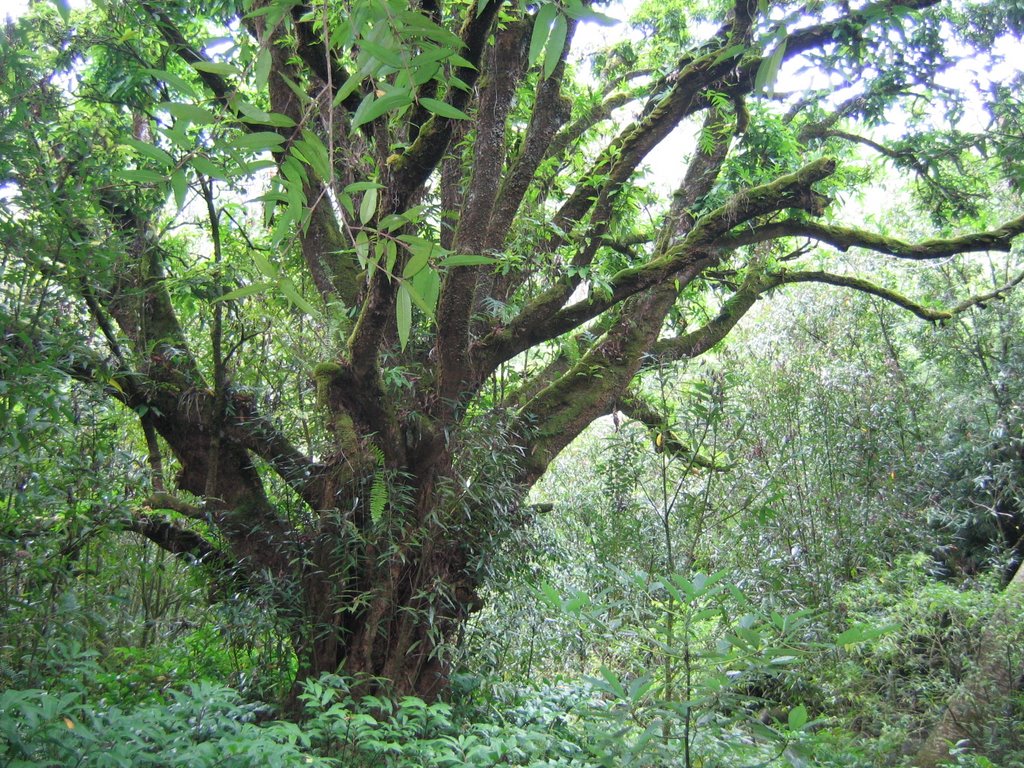
I've just returned from a wonderous trip to Hawaii and have posted the first batch of photos from a "hike" I took. This was unlike any hike (or other outdoor adventure for that matter!) I've ever been on before. As the trek progressed, the "path" became more treacherous and slippery, my future more and more uncertain. I felt so many feelings arise-from wonder to fear to exhilaration to relief to boredom to exhaustion to peace. Many needs were met, including connection, mutual support, beauty, "stretch", transcendence...
If you would like to see the pictures from this adventure, go to: share.shutterfly.com/action/welcome?sid=0AcOGrZs4bM2LjA
I'd love to hear your responses!
Warmly,
Jim
Friday, August 11, 2006
A Ramble on Personal Transportation and Emissions
I'm feeling better today after suffering my first migraine attack since moving to California. Another fantasy shattered. Another nail in the coffin of impermanence.
So, I started responding to emails and got involved again with a thread about the best option for a personal vehicle. I've been in a friendly debate with friends about bio-diesel vs a new Prius (Al Gore's advice) vs keeping my own car 'til the wheels fall off.
It seems clear to me that people driving in cars (or using other modes of transportation utilizing internal combustion) contribute to emissions. I see that when I buy a Prius or Insight or whatever, my personal contribution will go down. This is true when I decide to ride my bike or walk to do errands as well and my car sits idly in the driveway. The "emissions life" of my car remains the same no matter which particular person drives it. The optimal strategy seems to be to sell the car to a reckless driver who will crash the car beyond repair within the first mile of driving it while not injuring himself/herself or someone else in the process, and the gas tank is almost empty when I sell it. Then he/she realizes that they don't want a dangerous personal emitter either and pledge to use public transportation for the rest of their life. This would seem to meet the most needs for the most people. (except the insurance company!) 1994 Nissan Quest for sale. 140,000 miles. Gently falling apart. $3000 or best offer. Terrible drivers only need apply. No gasoline included.
I was impressed recently when my car had to be inspected under the CA emissions standards, which are much stricter than NM. My car, although it is almost 14 years old, emits a fraction of the allowed standard. This stimulates slightly less guilt.
Recently I saw "Who Killed the Electric Car". A sad and poignant tale of how the Powers that Be seem locked in an egocentric struggle to focus the most wealth on the least folks at the greatest cost to the most folks. Fun fact to know and tell: The average person drives an average of only 29 miles each day. I reckon this about the range of a golf cart. I also heard that the average speed for a car in New York City is about 3 miles an hour, although I can't remember where I read that. In spite of that, we continue to build and buy cars capable of 400 mile trips at 100 miles per hour. That's abundance?
http://www.sonyclassics.com/whokilledtheelectriccar/
There are kits available to convert many cars to Lithium Ion batteries now. The guy who developed the Li battery is quite a character. He's one of the stars of the movie. Amazing he hasn't been disappeared. One of his early breakthrough batteries was bought lock, stock, and barrel by GM and was never seen from again, allegedly for use in the Electric Car of the movie title, R. I. P.
If the rest of my van was not so completely falling apart, piece by piece, I would consider that option. Apparently the ideal vehicle for conversion is a Chevy S-10 pickup.
Meanwhile, my personal goal is 15 gallons a month or less. At almost $3.30 a gallon, it still a significant dent in the wallet. And gas remains cheaper in the US than most markets. In Holland, gas is about $7/gallon. The biggest exception, our friends to the south in Venezuela who enjoy gas for less than 15 cents a gallon, as of March 2005. (http://money.cnn.com/pf/features/lists/global_gasprices/)
I recently "ran the numbers" on my personal car ownership costs, including gas, maintenance, insurance, et. al. Sometimes I wonder if I could save money by renting a car once a week, or even taking a taxi any place I didn't want to walk. This would not decrease my personal emissions, however, except I might become more efficient. I was astonished to see that I have spent $65,000 in auto related expenses since I started keeping records about 10 years ago. This does not include gas expenses for 7 of the years. Adding an average of $1000/year makes for $72000. The van has 140000 miles on it. I'm guessing the other cars I've owned (driven by my kids) contributed another 50,000 miles. Round it up to 200000 miles. Makes the cost per mile about .36/mi.
Still works out cheaper to own a car. Economies of scale, I reckon. And global warming is one apparent cost of the relatively cheap convenience we enjoy. A curse on our grandchildren, and ourselves if the Buddhists are right about reincarnation.
In Singapore, a "license" to own a car is about $100,000. Public transportation works quite well there.
GloballyWarmly,
Jim
I'm feeling better today after suffering my first migraine attack since moving to California. Another fantasy shattered. Another nail in the coffin of impermanence.
So, I started responding to emails and got involved again with a thread about the best option for a personal vehicle. I've been in a friendly debate with friends about bio-diesel vs a new Prius (Al Gore's advice) vs keeping my own car 'til the wheels fall off.
It seems clear to me that people driving in cars (or using other modes of transportation utilizing internal combustion) contribute to emissions. I see that when I buy a Prius or Insight or whatever, my personal contribution will go down. This is true when I decide to ride my bike or walk to do errands as well and my car sits idly in the driveway. The "emissions life" of my car remains the same no matter which particular person drives it. The optimal strategy seems to be to sell the car to a reckless driver who will crash the car beyond repair within the first mile of driving it while not injuring himself/herself or someone else in the process, and the gas tank is almost empty when I sell it. Then he/she realizes that they don't want a dangerous personal emitter either and pledge to use public transportation for the rest of their life. This would seem to meet the most needs for the most people. (except the insurance company!) 1994 Nissan Quest for sale. 140,000 miles. Gently falling apart. $3000 or best offer. Terrible drivers only need apply. No gasoline included.
I was impressed recently when my car had to be inspected under the CA emissions standards, which are much stricter than NM. My car, although it is almost 14 years old, emits a fraction of the allowed standard. This stimulates slightly less guilt.
Recently I saw "Who Killed the Electric Car". A sad and poignant tale of how the Powers that Be seem locked in an egocentric struggle to focus the most wealth on the least folks at the greatest cost to the most folks. Fun fact to know and tell: The average person drives an average of only 29 miles each day. I reckon this about the range of a golf cart. I also heard that the average speed for a car in New York City is about 3 miles an hour, although I can't remember where I read that. In spite of that, we continue to build and buy cars capable of 400 mile trips at 100 miles per hour. That's abundance?
http://www.sonyclassics.com/whokilledtheelectriccar/
There are kits available to convert many cars to Lithium Ion batteries now. The guy who developed the Li battery is quite a character. He's one of the stars of the movie. Amazing he hasn't been disappeared. One of his early breakthrough batteries was bought lock, stock, and barrel by GM and was never seen from again, allegedly for use in the Electric Car of the movie title, R. I. P.
If the rest of my van was not so completely falling apart, piece by piece, I would consider that option. Apparently the ideal vehicle for conversion is a Chevy S-10 pickup.
Meanwhile, my personal goal is 15 gallons a month or less. At almost $3.30 a gallon, it still a significant dent in the wallet. And gas remains cheaper in the US than most markets. In Holland, gas is about $7/gallon. The biggest exception, our friends to the south in Venezuela who enjoy gas for less than 15 cents a gallon, as of March 2005. (http://money.cnn.com/pf/features/lists/global_gasprices/)
I recently "ran the numbers" on my personal car ownership costs, including gas, maintenance, insurance, et. al. Sometimes I wonder if I could save money by renting a car once a week, or even taking a taxi any place I didn't want to walk. This would not decrease my personal emissions, however, except I might become more efficient. I was astonished to see that I have spent $65,000 in auto related expenses since I started keeping records about 10 years ago. This does not include gas expenses for 7 of the years. Adding an average of $1000/year makes for $72000. The van has 140000 miles on it. I'm guessing the other cars I've owned (driven by my kids) contributed another 50,000 miles. Round it up to 200000 miles. Makes the cost per mile about .36/mi.
Still works out cheaper to own a car. Economies of scale, I reckon. And global warming is one apparent cost of the relatively cheap convenience we enjoy. A curse on our grandchildren, and ourselves if the Buddhists are right about reincarnation.
In Singapore, a "license" to own a car is about $100,000. Public transportation works quite well there.
GloballyWarmly,
Jim
A Ramble on Personal Transportation and Emissions
I'm feeling better today after suffering my first migraine attack since moving to California. Another fantasy shattered. Another nail in the coffin of impermanence.
So, I started responding to emails and got involved again with a thread about the best option for a personal vehicle. I've been in a friendly debate with friends about bio-diesel vs a new Prius (Al Gore's advice) vs keeping my own car 'til the wheels fall off.
It seems clear to me that people driving in cars (or using other modes of transportation utilizing internal combustion) contribute to emissions. I see that when I buy a Prius or Insight or whatever, my personal contribution will go down. This is true when I decide to ride my bike or walk to do errands as well and my car sits idly in the driveway. The "emissions life" of my car remains the same no matter which particular person drives it. The optimal strategy seems to be to sell the car to a reckless driver who will crash the car beyond repair within the first mile of driving it while not injuring himself/herself or someone else in the process, and the gas tank is almost empty when I sell it. Then he/she realizes that they don't want a dangerous personal emitter either and pledge to use public transportation for the rest of their life. This would seem to meet the most needs for the most people. (except the insurance company!) 1994 Nissan Quest for sale. 140,000 miles. Gently falling apart. $3000 or best offer. Terrible drivers only need apply. No gasoline included.
I was impressed recently when my car had to be inspected under the CA emissions standards, which are much stricter than NM. My car, although it is almost 14 years old, emits a fraction of the allowed standard. This stimulates slightly less guilt.
Recently I saw "Who Killed the Electric Car". A sad and poignant tale of how the Powers that Be seem locked in an egocentric struggle to focus the most wealth on the least folks at the greatest cost to the most folks. Fun fact to know and tell: The average person drives an average of only 29 miles each day. I reckon this about the range of a golf cart. http://www.sonyclassics.com/whokilledtheelectriccar/
There are kits available to convert many cars to Lithium Ion batteries now. The guy who developed the Li battery is quite a character. He's one of the stars of the movie. Amazing he hasn't been disappeared. One of his early breakthrough batteries was bought lock, stock, and barrel by GM and was never seen from again, allegedly for use in the Electric Car of the movie title, R. I. P.
If the rest of my van was not so completely falling apart, piece by piece, I would consider that option. Apparently the ideal vehicle for conversion is a Chevy S-10 pickup.
Meanwhile, my personal goal is 15 gallons a month or less. At almost $3.30 a gallon, it still a significant dent in the wallet. And gas remains cheaper in the US than most markets. In Holland, gas is about $7/gallon. The biggest exception, our friends to the south in Venezuela who enjoy gas for less than 15 cents a gallon, as of March 2005. (http://money.cnn.com/pf/features/lists/global_gasprices/)
I recently "ran the numbers" on my personal car ownership costs, including gas, maintenance, insurance, et. al. Sometimes I wonder if I could save money by renting a car once a week, or even taking a taxi any place I didn't want to walk. This would not decrease my personal emissions, however, except I might become more efficient. I was astonished to see that I have spent $65,000 in auto related expenses since I started keeping records about 10 years ago. This does not include gas expenses for 7 of the years. Adding an average of $1000/year makes for $72000. The van has 140000 miles on it. I'm guessing the other cars I've owned (driven by my kids) contributed another 50,000 miles. Round it up to 200000 miles. Makes the cost per mile about .36/mi.
Still works out cheaper to own a car. Economies of scale, I reckon. And global warming is one apparent cost of the relatively cheap convenience we enjoy. A curse on our grandchildren, and ourselves if the Buddhists are right about reincarnation.
In Singapore, a "license" to own a car is about $100,000. Public transportation works quite well there.
GloballyWarmly,
Jim
I'm feeling better today after suffering my first migraine attack since moving to California. Another fantasy shattered. Another nail in the coffin of impermanence.
So, I started responding to emails and got involved again with a thread about the best option for a personal vehicle. I've been in a friendly debate with friends about bio-diesel vs a new Prius (Al Gore's advice) vs keeping my own car 'til the wheels fall off.
It seems clear to me that people driving in cars (or using other modes of transportation utilizing internal combustion) contribute to emissions. I see that when I buy a Prius or Insight or whatever, my personal contribution will go down. This is true when I decide to ride my bike or walk to do errands as well and my car sits idly in the driveway. The "emissions life" of my car remains the same no matter which particular person drives it. The optimal strategy seems to be to sell the car to a reckless driver who will crash the car beyond repair within the first mile of driving it while not injuring himself/herself or someone else in the process, and the gas tank is almost empty when I sell it. Then he/she realizes that they don't want a dangerous personal emitter either and pledge to use public transportation for the rest of their life. This would seem to meet the most needs for the most people. (except the insurance company!) 1994 Nissan Quest for sale. 140,000 miles. Gently falling apart. $3000 or best offer. Terrible drivers only need apply. No gasoline included.
I was impressed recently when my car had to be inspected under the CA emissions standards, which are much stricter than NM. My car, although it is almost 14 years old, emits a fraction of the allowed standard. This stimulates slightly less guilt.
Recently I saw "Who Killed the Electric Car". A sad and poignant tale of how the Powers that Be seem locked in an egocentric struggle to focus the most wealth on the least folks at the greatest cost to the most folks. Fun fact to know and tell: The average person drives an average of only 29 miles each day. I reckon this about the range of a golf cart. http://www.sonyclassics.com/whokilledtheelectriccar/
There are kits available to convert many cars to Lithium Ion batteries now. The guy who developed the Li battery is quite a character. He's one of the stars of the movie. Amazing he hasn't been disappeared. One of his early breakthrough batteries was bought lock, stock, and barrel by GM and was never seen from again, allegedly for use in the Electric Car of the movie title, R. I. P.
If the rest of my van was not so completely falling apart, piece by piece, I would consider that option. Apparently the ideal vehicle for conversion is a Chevy S-10 pickup.
Meanwhile, my personal goal is 15 gallons a month or less. At almost $3.30 a gallon, it still a significant dent in the wallet. And gas remains cheaper in the US than most markets. In Holland, gas is about $7/gallon. The biggest exception, our friends to the south in Venezuela who enjoy gas for less than 15 cents a gallon, as of March 2005. (http://money.cnn.com/pf/features/lists/global_gasprices/)
I recently "ran the numbers" on my personal car ownership costs, including gas, maintenance, insurance, et. al. Sometimes I wonder if I could save money by renting a car once a week, or even taking a taxi any place I didn't want to walk. This would not decrease my personal emissions, however, except I might become more efficient. I was astonished to see that I have spent $65,000 in auto related expenses since I started keeping records about 10 years ago. This does not include gas expenses for 7 of the years. Adding an average of $1000/year makes for $72000. The van has 140000 miles on it. I'm guessing the other cars I've owned (driven by my kids) contributed another 50,000 miles. Round it up to 200000 miles. Makes the cost per mile about .36/mi.
Still works out cheaper to own a car. Economies of scale, I reckon. And global warming is one apparent cost of the relatively cheap convenience we enjoy. A curse on our grandchildren, and ourselves if the Buddhists are right about reincarnation.
In Singapore, a "license" to own a car is about $100,000. Public transportation works quite well there.
GloballyWarmly,
Jim
Thursday, August 10, 2006
Online Practice Group
Live, Interactive Component Now Scheduled
Greetings, Friends,
Well, I've finally settled on a strategy to try for the live and interactive component of our online NVC practice group. I feel a mixture of excitement and apprehension as we enter a new world together! My hopes for the group are to foster a community based on honesty and empathy, grounded in self-connection. We will decide together how to use our time with one another.
We will start with a 90 minute call on Thursday, August 31 at 4 pm, Pacific Daylight Time (-8 GMT). If you would enjoy participating, please follow the following instructions at about 3:55 pm on August 31.
(Note, this is a TOLL call, and you will be billed for the duration of the call by your long distance provider. The number is in IOWA, USA.)
If you are using Skype or other VOIP providers, you may or may not be able to access the call. I have had mixed success with this, apparently because of the delay sometimes encountered sending touch tone signals over the internet.
There is no charge for the Practice Group, although you can send a contribution if doing so would meet your needs.
To Participate:
1. Dial (319) 632-1100
2. Enter your participant access code: 137631#
3. Please take a moment to listen in, and when you sense an "opening" announce yourself.
4. At 4 pm, I will mute all of you in order to say a few things about the structure of the group and my present feelings, needs, and requests, and then I will open the channel to encourage an optional check-in about what needs your are hoping to meet through participating.
Note: Although I cannot imagine more than a dozen of us connecting this way, there is the potential for 96 folks to join the conference call. We will have the option of recording some or all of the class, and folks can access it at their leisure. This will be one of our first agenda items for consent.
If you have any questions, please write to me at nvctrainer@gmail.com
Another final note. The requests for times and days that would work for folks to participate varied widely, from 5 am - 9pm PDT and every day of the week! I finally chose a time that seemed to work for the most people. If this seems like a strategy that meets folks needs, we can schedule other time periods as well.
Warmly,
Jim
Live, Interactive Component Now Scheduled
Greetings, Friends,
Well, I've finally settled on a strategy to try for the live and interactive component of our online NVC practice group. I feel a mixture of excitement and apprehension as we enter a new world together! My hopes for the group are to foster a community based on honesty and empathy, grounded in self-connection. We will decide together how to use our time with one another.
We will start with a 90 minute call on Thursday, August 31 at 4 pm, Pacific Daylight Time (-8 GMT). If you would enjoy participating, please follow the following instructions at about 3:55 pm on August 31.
(Note, this is a TOLL call, and you will be billed for the duration of the call by your long distance provider. The number is in IOWA, USA.)
If you are using Skype or other VOIP providers, you may or may not be able to access the call. I have had mixed success with this, apparently because of the delay sometimes encountered sending touch tone signals over the internet.
There is no charge for the Practice Group, although you can send a contribution if doing so would meet your needs.
To Participate:
1. Dial (319) 632-1100
2. Enter your participant access code: 137631#
3. Please take a moment to listen in, and when you sense an "opening" announce yourself.
4. At 4 pm, I will mute all of you in order to say a few things about the structure of the group and my present feelings, needs, and requests, and then I will open the channel to encourage an optional check-in about what needs your are hoping to meet through participating.
Note: Although I cannot imagine more than a dozen of us connecting this way, there is the potential for 96 folks to join the conference call. We will have the option of recording some or all of the class, and folks can access it at their leisure. This will be one of our first agenda items for consent.
If you have any questions, please write to me at nvctrainer@gmail.com
Another final note. The requests for times and days that would work for folks to participate varied widely, from 5 am - 9pm PDT and every day of the week! I finally chose a time that seemed to work for the most people. If this seems like a strategy that meets folks needs, we can schedule other time periods as well.
Warmly,
Jim
Monday, July 31, 2006
Greetings, Friends,
I'm happy that our son Jiva is "home" with us this summer, working with International Projects at CNVC. This summer break for him from his Master's degree studies at the European University for Peace Studies seems like a win-win strategy for both Jiva and CNVC.
Today CNVC received a letter from someone asking about NVC and the current crisis in Israel and Lebanon. The task of responding ended up on Jiva's desk, and he shared it with me. Here's an excerpt of the letter and Jiva's response:
I would really like to know what people in the NVC world are thinking and
feeling about the current situation in Lebanon. Mostly what we hear in the
news is condemnation of Israel for its disproportionate use of force, which
is justifiable. I cannot help judging the Israeli government as taking
action which is unlikely to meet anyone's needs, not even their own.
Hizbollah also is being judged, because they are prepared to threaten the
security and peace of Israeli citizens to advance their cause, as well as
risking the peace and lives of Lebanese. I want to see justice for
Palestinian people, who have had to live in the most terrible conditions. I
want to see Israelis able to live in peace and not pawns in the power games
of those with various interests in the region. I want to see people able to
transcend history and tribe in order to advance the interests and needs of
all people living in the region. Demonstrating against Israel or anyone else
for that matter, does not address any of this, and is counterproductive. How
can we grow a new kind of demonstration, that is positive in intent, that
seeks to unite all who love peace and value the common humanity of all - and
which is at the same time not naive, but cognisant of the strong feelings
and complex issues involved and able to acknowledge and work with that. Who
is doing anything to advance such a cause?
-Concerned
Dear Concerned,
It sounds like you are really mourning what is going on in Israel and Lebanon right now. Sounds like some of the responses that you've heard in the news have stimulated some frustration, anger, and sadness, because your needs for harmony, mutuality, and peace are not being met through current strategies of diplomats and peaceworkers on all sides. I'm also hearing a deep sense of caring and compassion, and it sounds like you are really needing to contribute in ways that will be meaningful to you and to all of those affected by the current violence. Is that right? Is there anything else alive in you around this?
I also feel deep sadness as I hear stories of the escalating violence and suffering each day in the region. At times, I feel hopeless, helpless, and alone, really wishing for a world in which people were more willing to meet needs in mutually life-enriching and peaceful ways. Personally I have many friends, mainly Palestinian and Israeli, who are now surrounded by more violence than ever, and I feel very afraid and helpless as I reflect on what they are going through. I am also wanting to see new approaches to nonviolent resolution that go beyond the norms of protest, which as you said, seem counterproductive, at best, most of the time. But I feel a surge of excitement reading your email, knowing that there are others out there who are wanting to approach and develop creative, life-serving strategies for building unity, peace, and love. I want to let you know that I hear about new developments around this every day, and feel very hopeful that if we all coordinate our actions and work together, we can contribute to creating a world to which we all want to belong.
As far as I know, there is no presence of NVC in Lebanon at this time. In Israel, we have many supporters and independent trainers working to bring the skills of NVC to the region (you can find their contact information on the CNVC website). We also have many other supporters in the region, including in Palestine, Iran, and the United Arab Emirates. CNVC is also working to build relationships with other organizations committed to nonviolence and conflict resolution, and so I am very open to hearing any information about what you know is going on there. Similarly, CNVC is reaching out to people in areas that are highly affected by violence, including the Middle East, and organizing support for special sessions with Marshall devoted to social change. For example, CNVC has recently supported a small group from Iraq to come to Switzerland for NVC training. Of course, many of the people that CNVC would like to reach in these areas are not able, financially, to make the trip and participate in the trainings, so one way to contribute to those efforts is to help them cover the costs through an earmarked contribution to CNVC.
The second major project that CNVC is involved in is the global campaign for Departments of Peace. The National Director of the US campaign, Lynn McMullen, is also the head of development for CNVC, and she has been incorporating NVC by working to train everyone involved in the campaign in basic NVC skills as well as deeper NVC consciousness. This entire campaign is very exciting to me, as it presents an opportunity to address issues around the causes and roots of violence throughout the world. You can find more info on that at www.thepeacealliance.org
You may also look on the CNVC website at the Social Change project, which includes a listserve of people interested in connecting NVC to social change. Here's the link: http://www.cnvc.org/psocchng.htm
Finally, on a more personal note, I am also a student in a MA program at the European University Centre for Peace Studies in Stadtschlaining, Austria. Many of my classmates are deeply involved in transforming the conflict in Israel and Lebanon, and we have all been in dialogue about what directions we would like to take our own work. I have been very vocal in pushing creative approaches to thinking about our contributions, as I share your hopelessness that protest will make any positive difference. I am happy to send you more information about organizations and groups that are working in the region, though many of them are based in Europe, Northern Africa, and the Middle East (and not N. America). Would that kind of information be helpful to you?
Finally, I encourage you to act in ways that are life-serving for you right now. If you don't see the strategies that you want to support in the world, I encourage you to create them! Talk to the people that you know, and don't know, start dialogue groups and spread awareness, bring up ideas at your own NVC practice group--I think we would all be surprised to find out just how much support there is out there.
One strategy that works for me when I'm feeling helpless or hopeless, or really any time I want to be creative, is to think about what needs are alive in me, and just hold those needs in my heart. Sometimes it helps to find a quiet place and just relax deeply for a few minutes, letting those needs settle in my heart and mind, and allowing myself the space and resources to cultivate creative strategies for meeting those needs. I've found that in my own practice, answers just tend to materialize in front of me, and new strategies seem to miraculously appear!
Would you be willing to hit reply and let me know what is alive in you as you read this? I would enjoy hearing any feelings or needs that have been stimulated. I am also very open to and interested in pursuing dialogue about how we can all contribute to this situation. Please feel free to request any more support or information.
With gratitude, respect, and peace,
Jiva
I'm happy that our son Jiva is "home" with us this summer, working with International Projects at CNVC. This summer break for him from his Master's degree studies at the European University for Peace Studies seems like a win-win strategy for both Jiva and CNVC.
Today CNVC received a letter from someone asking about NVC and the current crisis in Israel and Lebanon. The task of responding ended up on Jiva's desk, and he shared it with me. Here's an excerpt of the letter and Jiva's response:
I would really like to know what people in the NVC world are thinking and
feeling about the current situation in Lebanon. Mostly what we hear in the
news is condemnation of Israel for its disproportionate use of force, which
is justifiable. I cannot help judging the Israeli government as taking
action which is unlikely to meet anyone's needs, not even their own.
Hizbollah also is being judged, because they are prepared to threaten the
security and peace of Israeli citizens to advance their cause, as well as
risking the peace and lives of Lebanese. I want to see justice for
Palestinian people, who have had to live in the most terrible conditions. I
want to see Israelis able to live in peace and not pawns in the power games
of those with various interests in the region. I want to see people able to
transcend history and tribe in order to advance the interests and needs of
all people living in the region. Demonstrating against Israel or anyone else
for that matter, does not address any of this, and is counterproductive. How
can we grow a new kind of demonstration, that is positive in intent, that
seeks to unite all who love peace and value the common humanity of all - and
which is at the same time not naive, but cognisant of the strong feelings
and complex issues involved and able to acknowledge and work with that. Who
is doing anything to advance such a cause?
-Concerned
Dear Concerned,
It sounds like you are really mourning what is going on in Israel and Lebanon right now. Sounds like some of the responses that you've heard in the news have stimulated some frustration, anger, and sadness, because your needs for harmony, mutuality, and peace are not being met through current strategies of diplomats and peaceworkers on all sides. I'm also hearing a deep sense of caring and compassion, and it sounds like you are really needing to contribute in ways that will be meaningful to you and to all of those affected by the current violence. Is that right? Is there anything else alive in you around this?
I also feel deep sadness as I hear stories of the escalating violence and suffering each day in the region. At times, I feel hopeless, helpless, and alone, really wishing for a world in which people were more willing to meet needs in mutually life-enriching and peaceful ways. Personally I have many friends, mainly Palestinian and Israeli, who are now surrounded by more violence than ever, and I feel very afraid and helpless as I reflect on what they are going through. I am also wanting to see new approaches to nonviolent resolution that go beyond the norms of protest, which as you said, seem counterproductive, at best, most of the time. But I feel a surge of excitement reading your email, knowing that there are others out there who are wanting to approach and develop creative, life-serving strategies for building unity, peace, and love. I want to let you know that I hear about new developments around this every day, and feel very hopeful that if we all coordinate our actions and work together, we can contribute to creating a world to which we all want to belong.
As far as I know, there is no presence of NVC in Lebanon at this time. In Israel, we have many supporters and independent trainers working to bring the skills of NVC to the region (you can find their contact information on the CNVC website). We also have many other supporters in the region, including in Palestine, Iran, and the United Arab Emirates. CNVC is also working to build relationships with other organizations committed to nonviolence and conflict resolution, and so I am very open to hearing any information about what you know is going on there. Similarly, CNVC is reaching out to people in areas that are highly affected by violence, including the Middle East, and organizing support for special sessions with Marshall devoted to social change. For example, CNVC has recently supported a small group from Iraq to come to Switzerland for NVC training. Of course, many of the people that CNVC would like to reach in these areas are not able, financially, to make the trip and participate in the trainings, so one way to contribute to those efforts is to help them cover the costs through an earmarked contribution to CNVC.
The second major project that CNVC is involved in is the global campaign for Departments of Peace. The National Director of the US campaign, Lynn McMullen, is also the head of development for CNVC, and she has been incorporating NVC by working to train everyone involved in the campaign in basic NVC skills as well as deeper NVC consciousness. This entire campaign is very exciting to me, as it presents an opportunity to address issues around the causes and roots of violence throughout the world. You can find more info on that at www.thepeacealliance.org
You may also look on the CNVC website at the Social Change project, which includes a listserve of people interested in connecting NVC to social change. Here's the link: http://www.cnvc.org/psocchng.htm
Finally, on a more personal note, I am also a student in a MA program at the European University Centre for Peace Studies in Stadtschlaining, Austria. Many of my classmates are deeply involved in transforming the conflict in Israel and Lebanon, and we have all been in dialogue about what directions we would like to take our own work. I have been very vocal in pushing creative approaches to thinking about our contributions, as I share your hopelessness that protest will make any positive difference. I am happy to send you more information about organizations and groups that are working in the region, though many of them are based in Europe, Northern Africa, and the Middle East (and not N. America). Would that kind of information be helpful to you?
Finally, I encourage you to act in ways that are life-serving for you right now. If you don't see the strategies that you want to support in the world, I encourage you to create them! Talk to the people that you know, and don't know, start dialogue groups and spread awareness, bring up ideas at your own NVC practice group--I think we would all be surprised to find out just how much support there is out there.
One strategy that works for me when I'm feeling helpless or hopeless, or really any time I want to be creative, is to think about what needs are alive in me, and just hold those needs in my heart. Sometimes it helps to find a quiet place and just relax deeply for a few minutes, letting those needs settle in my heart and mind, and allowing myself the space and resources to cultivate creative strategies for meeting those needs. I've found that in my own practice, answers just tend to materialize in front of me, and new strategies seem to miraculously appear!
Would you be willing to hit reply and let me know what is alive in you as you read this? I would enjoy hearing any feelings or needs that have been stimulated. I am also very open to and interested in pursuing dialogue about how we can all contribute to this situation. Please feel free to request any more support or information.
With gratitude, respect, and peace,
Jiva
Sunday, July 23, 2006
Dreaming in Giraffe
I recently received an email from someone sharing their NVC dreams, hopes and goals. She asked, "what are some of the NVC leadership dreams that some other people have?" This stimulated in me the following response:
When I let myself dream really big, I see hundreds of thousands of practice
groups in the world. Like AA, you can arrive in any city of the world, consult a guide and find a place to practice NVC in a community of support.
I see a million certified trainers (or trainers with that skill and
consciousness, regardless of affiliation with CNVC)
I also see NVC TV, movies, music, media.
I see a Criminal and Civil Justice system based on a restorative model, not a punitive model.
I see a world where ALL people's basic needs are met with relative certainty. Meeting needs is the sure path to a peaceful model of conflict revolution.
I see the opportunity to live an immersion experience, a Global NVC Training
Center where people can come and learn to integrate NVC more deeply into their lives.
I see a network of NVC Communities around the planet.
I see a network of NVC based Senior Citizen centers, tapping the consciousness
and social change potential of Baby boomers done with accumulation and ready for
contribution.
I see a network of schools at all levels teaching and living NVC.
I see a vibrant and acive online community of learning, support, contribution and integration.
I see what is happening in Germany, happening everywhere! Germany leads the world in trainers per capita and getting NVC into the consciousness of Everyman. I've heard that bookshops throughout Germany prominently display the German translation of Marshall's book.
I see a network of synergy between CNVC and other like-hearted groups contributing to meeting needs.
I see us going past the tipping point of awareness of and focus on Needs.
And I see a more active presence of the NVC community in world affairs. Where is the NVC voice concerning Lebanon, Syria, and the other hot spots? Where is the NVC consciousness in the White House, the UN, in politics in general? Where is the NVC consciousness in the "Anti-War" movement?
I see Marshall receiving the Nobel Peace prize. I see Marshall or another "senior Giraffe" as the Secretary of the new US Department of Peace. I see Department of Peace as common as Miistries of War or Defense.
I see Marshall on Oprah, and Leno, and Letterman, on PBS.
And I see what is happening now continuing to grow and blossom. I'm celebrating over 200 Certified Trainers, many registered cert-candidates, and a quarter million folks touched by NVC in the past few years.
And I dream of undreamed of possibilities emerging from our connection to Needs and Request energy!
I'm looking forward to hearing other's dreams!
Warmly,
Jim
I recently received an email from someone sharing their NVC dreams, hopes and goals. She asked, "what are some of the NVC leadership dreams that some other people have?" This stimulated in me the following response:
When I let myself dream really big, I see hundreds of thousands of practice
groups in the world. Like AA, you can arrive in any city of the world, consult a guide and find a place to practice NVC in a community of support.
I see a million certified trainers (or trainers with that skill and
consciousness, regardless of affiliation with CNVC)
I also see NVC TV, movies, music, media.
I see a Criminal and Civil Justice system based on a restorative model, not a punitive model.
I see a world where ALL people's basic needs are met with relative certainty. Meeting needs is the sure path to a peaceful model of conflict revolution.
I see the opportunity to live an immersion experience, a Global NVC Training
Center where people can come and learn to integrate NVC more deeply into their lives.
I see a network of NVC Communities around the planet.
I see a network of NVC based Senior Citizen centers, tapping the consciousness
and social change potential of Baby boomers done with accumulation and ready for
contribution.
I see a network of schools at all levels teaching and living NVC.
I see a vibrant and acive online community of learning, support, contribution and integration.
I see what is happening in Germany, happening everywhere! Germany leads the world in trainers per capita and getting NVC into the consciousness of Everyman. I've heard that bookshops throughout Germany prominently display the German translation of Marshall's book.
I see a network of synergy between CNVC and other like-hearted groups contributing to meeting needs.
I see us going past the tipping point of awareness of and focus on Needs.
And I see a more active presence of the NVC community in world affairs. Where is the NVC voice concerning Lebanon, Syria, and the other hot spots? Where is the NVC consciousness in the White House, the UN, in politics in general? Where is the NVC consciousness in the "Anti-War" movement?
I see Marshall receiving the Nobel Peace prize. I see Marshall or another "senior Giraffe" as the Secretary of the new US Department of Peace. I see Department of Peace as common as Miistries of War or Defense.
I see Marshall on Oprah, and Leno, and Letterman, on PBS.
And I see what is happening now continuing to grow and blossom. I'm celebrating over 200 Certified Trainers, many registered cert-candidates, and a quarter million folks touched by NVC in the past few years.
And I dream of undreamed of possibilities emerging from our connection to Needs and Request energy!
I'm looking forward to hearing other's dreams!
Warmly,
Jim
Wednesday, July 19, 2006
Greetings, Friends,
I'm feeling excited and pleased that my Radical Compassion: The Essence of Nonviolent Communication has "sold out." This meets my needs for contribution and support!
I will continue to accept registrations with the intent of offering another series as soon as possible.
I received a touching note from one participant today who expressed both excitement and apprehension about the class. I responded with some empathy, then some advice, which I will pass on to you. I'd like to hear if using this simple self-emapthy process meets any of your needs!
Warmly,
Jim
________
I'm guessing your apprehension is around your needs for acceptance and/or competence, is that accurate?
You can get a head start on the class by "connecting with the life" within that apprehension. If you want, take about 5 minutes and write down everything you're telling yourself about attending the class. Uncensored. You will not have to share it with anyone! This is just for you and your growth...
Then, go back and mindfully read what you have written with empathic ears, offering yourself the gift of presence, focusing on the life within the "jackal". See if you can guess what feelings and needs are "under the surface" of what you have written. For example, if I wrote, "Everybody thinks this class is going to suck, especially after they hear me talk for about 30 seconds!", I might guess that I'm feeling anxious, scared, and needing a sense of acceptance and self-acceptance. I suggest you write the feelings and needs down next to each thought. For me, connecting with feelings and needs in this way is a life-serving strategy that meets needs for self-connection, learning, emotional liberation, and growth.
When I was a baby, baby giraffe (I've just graduated to baby giraffe!), I found this a valuable tool for learning and integrating a needs-based consciousness and developing presence with myself and others. I still use it when I get so stuck that nothing else seems to help me connect with life.
I'm hopeful you find this advice useful.
I'm feeling excited and pleased that my Radical Compassion: The Essence of Nonviolent Communication has "sold out." This meets my needs for contribution and support!
I will continue to accept registrations with the intent of offering another series as soon as possible.
I received a touching note from one participant today who expressed both excitement and apprehension about the class. I responded with some empathy, then some advice, which I will pass on to you. I'd like to hear if using this simple self-emapthy process meets any of your needs!
Warmly,
Jim
________
I'm guessing your apprehension is around your needs for acceptance and/or competence, is that accurate?
You can get a head start on the class by "connecting with the life" within that apprehension. If you want, take about 5 minutes and write down everything you're telling yourself about attending the class. Uncensored. You will not have to share it with anyone! This is just for you and your growth...
Then, go back and mindfully read what you have written with empathic ears, offering yourself the gift of presence, focusing on the life within the "jackal". See if you can guess what feelings and needs are "under the surface" of what you have written. For example, if I wrote, "Everybody thinks this class is going to suck, especially after they hear me talk for about 30 seconds!", I might guess that I'm feeling anxious, scared, and needing a sense of acceptance and self-acceptance. I suggest you write the feelings and needs down next to each thought. For me, connecting with feelings and needs in this way is a life-serving strategy that meets needs for self-connection, learning, emotional liberation, and growth.
When I was a baby, baby giraffe (I've just graduated to baby giraffe!), I found this a valuable tool for learning and integrating a needs-based consciousness and developing presence with myself and others. I still use it when I get so stuck that nothing else seems to help me connect with life.
I'm hopeful you find this advice useful.
Monday, July 17, 2006

Celebrating baby "giraffe-ness!".
May your needs be met with perfection!
Photo from http://www.flickr.com/photos/amberlion/190125425/
Photo of 4 month old Nigel by amberlion http://creativecommons.org/licenses/by-nc/2.5/
Sunday, July 16, 2006
Greetings, Friends,
I feel happy that a couple of folks have recently joined my yahoo group, NVCLeadership! Seeing that meets my
needs for growth and connection.
When I first started an NVCLeadership yahoo group just after moving to California, it was with an intention to create an online community
focused on the practice of Nonviolent Communication. Since then, I have begun
actualizing that potential with some other strategies, including this blog (http://
connectionnow.blogspot.com) my training site (http://
radicalcompassion.squarespace.com) and my vaestro channel (http://vaestro.com/
viewforum-84). I've also recently begun a collaboration with the NVC Academy. With all
of these "Channels" opening, I'm feeling at once exhilirated and overwhelmed.
I'd like to hear from folks connected to this blog what needs you have related to
learning, practicing and integrating NVC and what specific requests you have about how to get your needs met. Hearing
this will support me in crafting some strategies that will hopefully meet your needs (perhaps for learning, community, exploration, and connection) while meeting those needs for me along with contribution, clarity and ease. Would you be willing to respond with what you would like?
I look forward to collaborating together to find ways to make our online community a valuable
resource for all of us.
Warmly,
Jim
I feel happy that a couple of folks have recently joined my yahoo group, NVCLeadership! Seeing that meets my
needs for growth and connection.
When I first started an NVCLeadership yahoo group just after moving to California, it was with an intention to create an online community
focused on the practice of Nonviolent Communication. Since then, I have begun
actualizing that potential with some other strategies, including this blog (http://
connectionnow.blogspot.com) my training site (http://
radicalcompassion.squarespace.com) and my vaestro channel (http://vaestro.com/
viewforum-84). I've also recently begun a collaboration with the NVC Academy. With all
of these "Channels" opening, I'm feeling at once exhilirated and overwhelmed.
I'd like to hear from folks connected to this blog what needs you have related to
learning, practicing and integrating NVC and what specific requests you have about how to get your needs met. Hearing
this will support me in crafting some strategies that will hopefully meet your needs (perhaps for learning, community, exploration, and connection) while meeting those needs for me along with contribution, clarity and ease. Would you be willing to respond with what you would like?
I look forward to collaborating together to find ways to make our online community a valuable
resource for all of us.
Warmly,
Jim
Sunday, July 09, 2006
"If you have a teenager, or if you invest in the stock market, you know very well that a complex system cannot be controlled, it can only be managed. Because responses cannot be predicted, the system can only be observed and responded to. The system may resist attempts to change its state. It may show resiliency. Or fragility. Or both.
An important feature of complex systems is that we don’t know how they work. We don’t understand them except in a general way; we simply interact with them. Whenever we think we understand them, we learn we don’t. Sometimes spectacularly."
You can read the complete speech by Michael Crichton @ http://www.michaelcrichton.com/speeches/complexity/complexity.html
I'd like to hear your response if you have one that you would enjoy sharing...
After reading the sppeech, I sense an opening within myself to more deeply question my assumptions; to endeavor to uncover the hidden ones; to forgive myself for mistakes I've made in trying to manage the complex systems in my life; and to have compassion for all of us that we share the same boat. I have an even deeper respect for our planetary system and more understanding of my relationship to it. It stimulates within me a yearning to increase my focus on human needs, as well as community and global needs. I feel safer, and paradoxically accept the risk posed just by being human on a chaotic planet.
An important feature of complex systems is that we don’t know how they work. We don’t understand them except in a general way; we simply interact with them. Whenever we think we understand them, we learn we don’t. Sometimes spectacularly."
You can read the complete speech by Michael Crichton @ http://www.michaelcrichton.com/speeches/complexity/complexity.html
I'd like to hear your response if you have one that you would enjoy sharing...
After reading the sppeech, I sense an opening within myself to more deeply question my assumptions; to endeavor to uncover the hidden ones; to forgive myself for mistakes I've made in trying to manage the complex systems in my life; and to have compassion for all of us that we share the same boat. I have an even deeper respect for our planetary system and more understanding of my relationship to it. It stimulates within me a yearning to increase my focus on human needs, as well as community and global needs. I feel safer, and paradoxically accept the risk posed just by being human on a chaotic planet.
Monday, July 03, 2006
Greetings friends,
I'm feeling excited about an upcoming opportunity to share Nonviolent Communication in the LA area. If you know anyone who may be interested in attending this workshop, would you be willing to let them know about it?
Warmly,
Jim
Radical Compassion: an experiential workshop in Nonviolent Communication
Sunday, July 9, 2006, Workshop
10:00 am – 4:00 pm
1420 N. Claremont Bvd Suite 204C
Claremont, CA 91711
AIKO INSTITUTE
Open to all skill levels, including those curious about NVC, beginning, intermediate, and advanced practitioners.
We will begin with an introductory practice session @ 10 am. Followed by a potluck around noon. After enjoying a meal, we will continue to learn about and practice the Nonviolent Communication process together until 4 pm.
Learn to use the Nonviolent Communication process :
- to deeply connect with your own feelings and needs;
- to honestly express your values to others in a way likely to inspire a compassionate response;
- to empathically receive the feelings and needs of others, no matter how the message may be delivered!
- to use the life-affirming power of gratitude as a fuel source for effective personal transformation, more connected relationships and life-affirming social change.
No previous experience required.
Please pre-register by calling 909-624-7770
For more information on the content of the workshop,
call Jim Manske @ 818-541-9695 or email nvctrainer@gmail.com
I'm feeling excited about an upcoming opportunity to share Nonviolent Communication in the LA area. If you know anyone who may be interested in attending this workshop, would you be willing to let them know about it?
Warmly,
Jim
Radical Compassion: an experiential workshop in Nonviolent Communication
Sunday, July 9, 2006, Workshop
10:00 am – 4:00 pm
1420 N. Claremont Bvd Suite 204C
Claremont, CA 91711
AIKO INSTITUTE
Open to all skill levels, including those curious about NVC, beginning, intermediate, and advanced practitioners.
We will begin with an introductory practice session @ 10 am. Followed by a potluck around noon. After enjoying a meal, we will continue to learn about and practice the Nonviolent Communication process together until 4 pm.
Learn to use the Nonviolent Communication process :
- to deeply connect with your own feelings and needs;
- to honestly express your values to others in a way likely to inspire a compassionate response;
- to empathically receive the feelings and needs of others, no matter how the message may be delivered!
- to use the life-affirming power of gratitude as a fuel source for effective personal transformation, more connected relationships and life-affirming social change.
No previous experience required.
Please pre-register by calling 909-624-7770
For more information on the content of the workshop,
call Jim Manske @ 818-541-9695 or email nvctrainer@gmail.com
Friday, June 30, 2006
Greetings, friends,
The whirlwind of the IIT has subsided, and I continue to bask in the afterglow of a remarkable event. I intend to share some of my feelings, needs and thoughts about the IIT later, but right now I'm back in scurry mode, preparing for a weekend junket to Oakland to participate with the BayNVC US Project meeting. In the meantime, I wanted to share with you some writing from my friend Steve Tumulo who attended the recent IIT. He asked me to give folks the opportunity to share some of his experience of integrating NVC. If you would enjoy connecting with Stephen about what comes alive in you as read it, feel free to make a comment or send him an email @ worldwidetumolo@earthlink.net
Warmly,
Jim
Dwelling in the Energy
At a recent Nonviolent Communication intensive training in Albuquerque, Robert Gonzales led a session called “the Living Energy of Needs.” In this session, I began to make a number of connections between the spirit, intention, and process of Nonviolent Communication and the message carried in Christian scripture.
“Meet the Need”
In his presentation, Robert led participants through an exercise in which he invited us to “meet the need.” The invitation was not to “meet” the need in the sense of acting to fulfill it immediately, but to encounter, or meet it. This was an invitation to bring into my consciousness and dwell in the energy in this beautiful desire within me. Through this exercise I encountered the need for self-respect not out of my sense of its lack, but of its presence.
“Fully Human and Fully Divine”
Meeting a need, encountering a need, for which I am deeply hungering and simultaneously connecting to its fullness reminds me of the Christian understanding of the mingling of humanity and divinity in Christ. Christ is the divine energy incarnate, embracing the limitations and unmet longings of human life, while losing none of the consciousness of who he is and where he comes from and his intention on this planet.
“Dwelling in the Energy of the Need”
As longing and eternal presence are embodied in the person of Jesus, Robert Gonzales invited participants to bring together the pain of a deeply felt unfulfilled need an awareness of that need in its presence and life. Through dwelling in the energy of the need, the energy begins to activate inside that person, not changing their circumstance, but simply adding an awareness of the preciousness of how I am made as human, with this beautiful heart’s desire. This is abiding or dwelling in the Quality, in the presence, behind the need.
“Abide in Me”
Jesus invited his disciples to remain in conscious connection with him regardless of their circumstance. “I am the vine and you are the branches,” he told them. “Whoever abides in me will have life within them. They will bear much fruit. Without me you can do nothing.”
“Don’t prepare what to say”
Jesus encouraged disciples to not prepare long speeches in their defense, but to simply abide in his presence and energy and let life flow. This is what I heard Robert inviting us to in focusing on meeting the need as encounter ahead of attempts to go out and get all our needs fulfilled.
“Love your neighbor as you love yourself.”
Out of the awareness of the preciousness of how we are made as human, all with the same powerful desires in each of our hearts, it’s natural to value others needs and my own needs on the same level. Living out of this mutual honoring is living out the great law, to love your neighbor as you love yourself.
“Christ on the Cross”
God is Love. And when Love is crucified, Love responds in a particular way. This is the response of Christ on the cross, experiencing the physical, emotional, psychological, and spiritual pain in unmet desires for love, friendship, life, understanding, intimacy, and much more with no condemnation. Christ on the cross experiences the raw pain of so many unmet desires for love and connection with his people and does not add to it condemnation. Never in the four gospels do we hear Jesus blaming himself or second-guessing his own choices. Likewise, Jesus does not condemn his persecutors: “Father, forgive them. They know not what they are doing.” He recognizes the tragedy in their choice of strategy and leaves them with forgiveness.
In doing so, Jesus leads humanity in the way out of the cycle of violence. Love incarnate bears the cross, the pain of not being met, and, choosing neither condemnation of self nor other, abides.
Stephen Michael Tumolo, Nonviolent Communication International Intensive Training, Albuquerque, New Mexico, June, 2006
The whirlwind of the IIT has subsided, and I continue to bask in the afterglow of a remarkable event. I intend to share some of my feelings, needs and thoughts about the IIT later, but right now I'm back in scurry mode, preparing for a weekend junket to Oakland to participate with the BayNVC US Project meeting. In the meantime, I wanted to share with you some writing from my friend Steve Tumulo who attended the recent IIT. He asked me to give folks the opportunity to share some of his experience of integrating NVC. If you would enjoy connecting with Stephen about what comes alive in you as read it, feel free to make a comment or send him an email @ worldwidetumolo@earthlink.net
Warmly,
Jim
Dwelling in the Energy
At a recent Nonviolent Communication intensive training in Albuquerque, Robert Gonzales led a session called “the Living Energy of Needs.” In this session, I began to make a number of connections between the spirit, intention, and process of Nonviolent Communication and the message carried in Christian scripture.
“Meet the Need”
In his presentation, Robert led participants through an exercise in which he invited us to “meet the need.” The invitation was not to “meet” the need in the sense of acting to fulfill it immediately, but to encounter, or meet it. This was an invitation to bring into my consciousness and dwell in the energy in this beautiful desire within me. Through this exercise I encountered the need for self-respect not out of my sense of its lack, but of its presence.
“Fully Human and Fully Divine”
Meeting a need, encountering a need, for which I am deeply hungering and simultaneously connecting to its fullness reminds me of the Christian understanding of the mingling of humanity and divinity in Christ. Christ is the divine energy incarnate, embracing the limitations and unmet longings of human life, while losing none of the consciousness of who he is and where he comes from and his intention on this planet.
“Dwelling in the Energy of the Need”
As longing and eternal presence are embodied in the person of Jesus, Robert Gonzales invited participants to bring together the pain of a deeply felt unfulfilled need an awareness of that need in its presence and life. Through dwelling in the energy of the need, the energy begins to activate inside that person, not changing their circumstance, but simply adding an awareness of the preciousness of how I am made as human, with this beautiful heart’s desire. This is abiding or dwelling in the Quality, in the presence, behind the need.
“Abide in Me”
Jesus invited his disciples to remain in conscious connection with him regardless of their circumstance. “I am the vine and you are the branches,” he told them. “Whoever abides in me will have life within them. They will bear much fruit. Without me you can do nothing.”
“Don’t prepare what to say”
Jesus encouraged disciples to not prepare long speeches in their defense, but to simply abide in his presence and energy and let life flow. This is what I heard Robert inviting us to in focusing on meeting the need as encounter ahead of attempts to go out and get all our needs fulfilled.
“Love your neighbor as you love yourself.”
Out of the awareness of the preciousness of how we are made as human, all with the same powerful desires in each of our hearts, it’s natural to value others needs and my own needs on the same level. Living out of this mutual honoring is living out the great law, to love your neighbor as you love yourself.
“Christ on the Cross”
God is Love. And when Love is crucified, Love responds in a particular way. This is the response of Christ on the cross, experiencing the physical, emotional, psychological, and spiritual pain in unmet desires for love, friendship, life, understanding, intimacy, and much more with no condemnation. Christ on the cross experiences the raw pain of so many unmet desires for love and connection with his people and does not add to it condemnation. Never in the four gospels do we hear Jesus blaming himself or second-guessing his own choices. Likewise, Jesus does not condemn his persecutors: “Father, forgive them. They know not what they are doing.” He recognizes the tragedy in their choice of strategy and leaves them with forgiveness.
In doing so, Jesus leads humanity in the way out of the cycle of violence. Love incarnate bears the cross, the pain of not being met, and, choosing neither condemnation of self nor other, abides.
Stephen Michael Tumolo, Nonviolent Communication International Intensive Training, Albuquerque, New Mexico, June, 2006
Friday, June 09, 2006
Greetings, Friends,
In the moment I'm feeling some overwhelm as I juggle all of the balls in my life. Organizing the IIT has become the number one focus for me, and I'm choosing to put some other projects on the shelf until July. I hope to continue to periodically update the two websites and make occasional contributions to the Vaestro channel. However, I do not currently have enough time, energy or other resources to continue building the technology and content of the Online Practice Group.
In the meantime, please continue your online exploration of the various NVC and CNVC resources available. Some are listed under the links on this page.
I'm appreciating your support and interest in learning more about NVC. If you have any feelings and needs that you would like to communicate, I feel open to receiving them.
Warmly,
Jim
In the moment I'm feeling some overwhelm as I juggle all of the balls in my life. Organizing the IIT has become the number one focus for me, and I'm choosing to put some other projects on the shelf until July. I hope to continue to periodically update the two websites and make occasional contributions to the Vaestro channel. However, I do not currently have enough time, energy or other resources to continue building the technology and content of the Online Practice Group.
In the meantime, please continue your online exploration of the various NVC and CNVC resources available. Some are listed under the links on this page.
I'm appreciating your support and interest in learning more about NVC. If you have any feelings and needs that you would like to communicate, I feel open to receiving them.
Warmly,
Jim
Subscribe to:
Posts (Atom)